 May 28, 2026 · 5 min read
Gamification in Educational Apps: A Comparison
Explore a comparative analysis of gamification in educational apps, focusing on leagues, badges, and workouts to enhance learning for grades 6-12.
Level Up Learning: A Comparative Analysis of Gamification in Educational Apps
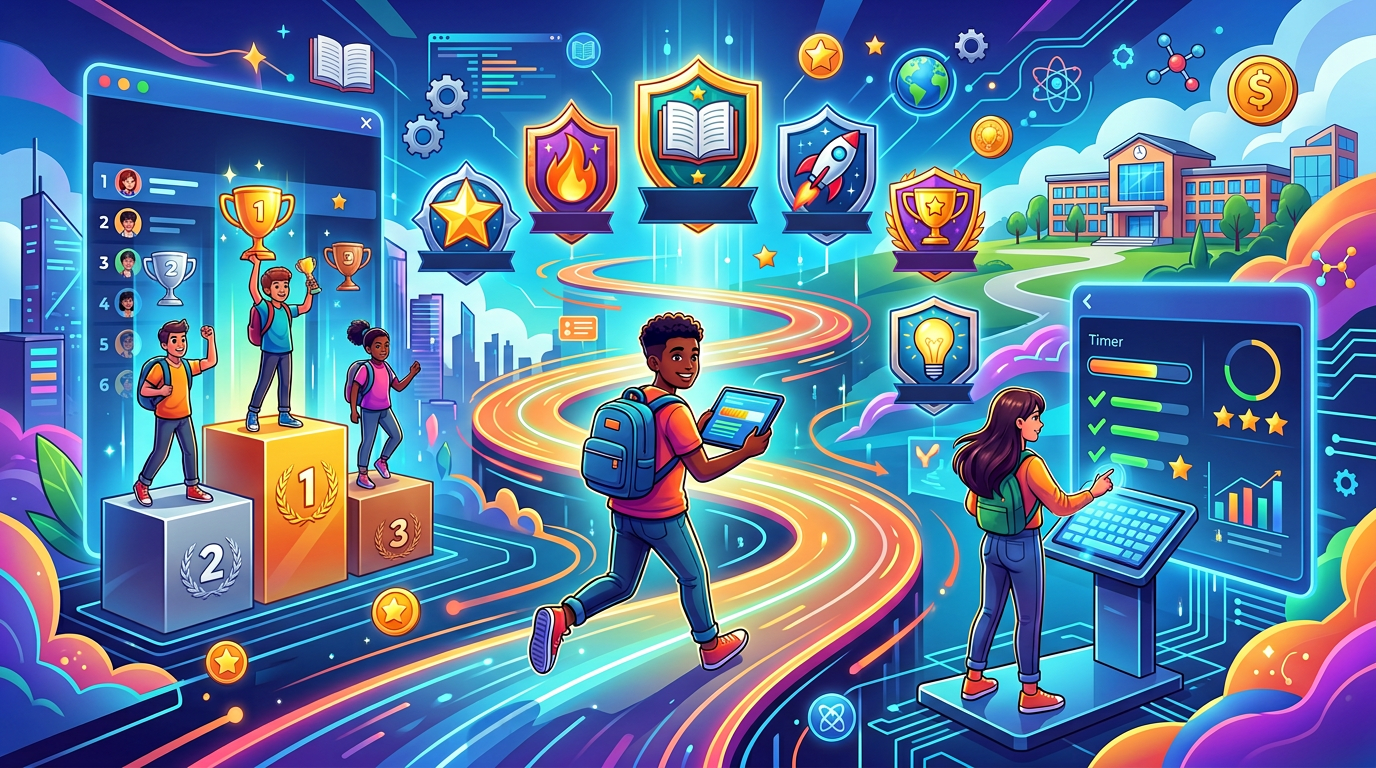
Are you ready to transform learning from a chore into an engaging adventure? Gamification, the integration of game-design elements and game principles in non-game contexts, is revolutionizing education. By incorporating elements like leagues, badges, and workouts into educational apps, we can significantly enhance user experience and learning efficacy. But which elements work best, and how can we leverage them to create truly effective learning tools for students in grades 6 through 12? Let's dive into a comparative analysis of these key gamification features and explore how ClutchMath is redefining education through the power of AI and gamified learning experiences.
Leagues: Fostering Healthy Competition and Collaboration
Leagues, leaderboards, and ranking systems are common gamification elements used to foster a sense of competition and community within educational apps. These systems allow students to compare their progress against their peers, motivating them to strive for higher scores and increased engagement [Source 3]. However, it's crucial to design leagues carefully. Overly competitive environments can be discouraging for students who are struggling, potentially leading to decreased motivation and a negative learning experience. The key is to balance competition with collaboration.
Effective league systems should:
Offer multiple tiers or divisions:
This allows students to compete against others with similar skill levels, providing a more equitable and motivating experience.
Incorporate team-based challenges:
Encouraging collaboration can foster a sense of community and provide opportunities for students to learn from each other.
Reward progress and effort, not just top scores:
Recognizing consistent effort and improvement can motivate a wider range of students, not just the high achievers.
ClutchMath aims to implement league systems that are inclusive and supportive, promoting a growth mindset and celebrating both individual and collective achievements.
Badges: Recognizing Achievements and Encouraging Exploration
Badges are visual representations of accomplishments, serving as digital rewards for completing specific tasks or reaching certain milestones. They provide students with a sense of accomplishment and recognition, motivating them to continue learning and exploring new concepts [Source 2]. Badges can be awarded for a variety of achievements, such as mastering a particular skill, completing a challenging workout, or actively participating in discussions.
The effectiveness of badges depends on their relevance and perceived value. Badges should:
Be aligned with learning objectives:
Ensure that badges are awarded for activities that contribute to meaningful learning outcomes.
Have clear and attainable criteria:
Students should understand how to earn a badge and believe that it is within their reach.
Be visually appealing and engaging:
Eye-catching designs can increase the desirability of badges and make them more rewarding to earn [Source 5].
ClutchMath leverages AI to personalize badge recommendations based on a student's learning path and progress, ensuring that badges are always relevant and motivating.
Workouts: Structuring Learning and Providing Immediate Feedback
Workouts, in the context of educational apps, refer to structured sets of exercises or activities designed to reinforce specific concepts and skills. Gamified workouts often incorporate elements like points, timers, and challenges to increase engagement and motivation. These elements can transform repetitive practice into an enjoyable and rewarding experience.
Effective gamified workouts should:
Provide clear learning objectives and instructions:
Students should understand what they are expected to learn and how to complete the workout.
Offer immediate feedback on performance:
Providing instant feedback allows students to identify their mistakes and adjust their approach in real-time, accelerating the learning process.
Adapt to individual learning needs:
Personalized workouts that adjust to a student's skill level and learning style can maximize engagement and effectiveness.
Incorporate real-world examples:
Connecting math and science concepts to real-world scenarios can make learning more relevant and engaging [Source 6].
ClutchMath's AI-powered platform generates personalized workouts tailored to each student's individual needs and learning style, providing detailed solution explanations and real-world examples to enhance understanding and retention.
Blended Learning and Gamification
The effectiveness of gamification is heightened when integrated into blended learning environments [Source 1]. Blended learning, which combines online and offline learning experiences, allows for a more flexible and personalized approach to education. Gamified educational apps can complement traditional classroom instruction by providing engaging and interactive learning activities that reinforce key concepts and skills.
By incorporating gamification elements into blended learning programs, we can:
Increase student engagement and motivation:
Gamified activities can make learning more enjoyable and rewarding, leading to increased participation and effort.
Provide personalized learning experiences:
AI-powered platforms can adapt to individual learning needs, providing customized content and feedback.
Track student progress and identify areas for improvement:
Gamified apps can collect data on student performance, providing valuable insights for teachers and parents.
Challenges and Considerations
While gamification offers numerous benefits, it's important to be aware of potential challenges and considerations. Over-reliance on extrinsic rewards (e.g., points, badges) can undermine intrinsic motivation, leading students to focus on earning rewards rather than on learning for its own sake. It's crucial to strike a balance between extrinsic and intrinsic motivation, designing gamified experiences that are both rewarding and intellectually stimulating.
Furthermore, it's important to ensure that gamification elements are aligned with learning objectives and that they do not distract from the core content. Gamification should enhance the learning experience, not detract from it.
Conclusion: Embracing the Future of Learning with ClutchMath
Gamification holds immense potential to transform education, making learning more engaging, effective, and enjoyable for students of all ages. By carefully designing and implementing gamification elements like leagues, badges, and workouts, we can create powerful learning tools that motivate students to achieve their full potential. ClutchMath is committed to redefining education through the power of AI and gamification, providing students in grades 6 through 12 with personalized and engaging learning experiences that prepare them for success in math and science.
Ready to experience the power of gamified learning? Visit ClutchMath today and discover how our AI-powered platform can help you level up your learning journey!
Sources
Effectiveness of Gamification Elements in Blended Learning ...
User-based Evaluation of Gamification Elements in an Educational ...
Gamification elements and their impacts on education: A review
[PDF] User-based Evaluation of Gamification Elements in an Educational ...](https://pdfs.semanticscholar.org/ce0c/2879b274d3834851caae1dad5c0f5becb345.pdf)
User-based Evaluation of Gamification Elements in an Educational ...
[PDF] ALIEN CUBE MATH PLAYGROUND](https://apps.hardocp.com/uploaded-files/5mlwGy/9TW384/alien-cube-math__playground.pdf)